
Working Groups, Silmo 2026
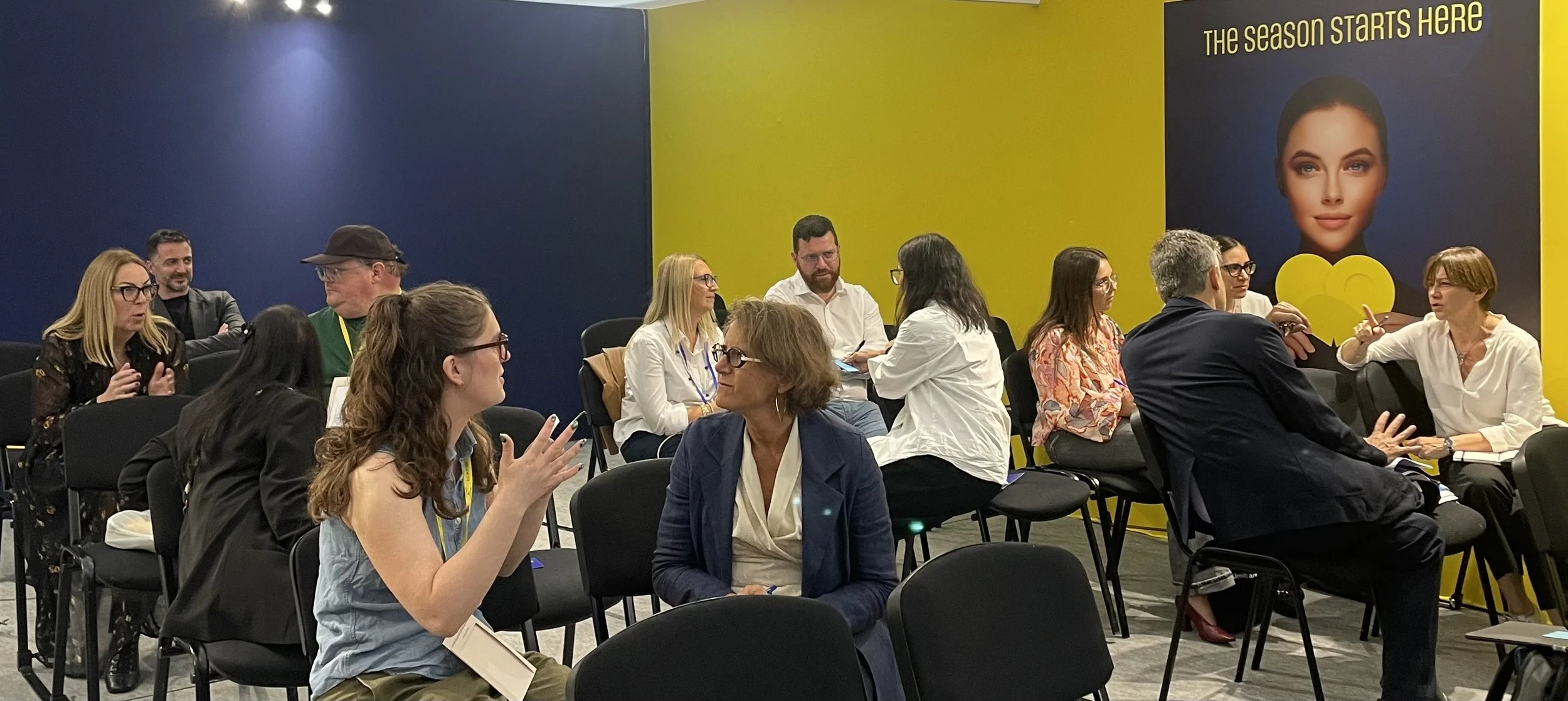
Participants shared unique perspectives and discussed the sustainability challenges facing eyewear at Silmo 2026.
On Sunday 27th September 2026 Frame The Future met for our first round-table at Silmo, with founding members and non-members alike, to discuss the upcoming projects from Frame The Future.
The group included representatives from Specsavers, Kering, Safilo, ANFAO, Regenesis Materials, Regenesis, Mondottica, Vanni, Euromonitor, and Optician Magazine, and was protected under Chatham House Rule which allows for more open conversation without attribution.
After a brief introduction of Frame The Future from Xenia Glutz von Blotzheim, Johanna Skans lead an engaging workshop that laid the foundations of the working groups that Frame The Future will begin to convene from 2027. These working groups will be formed by members to focus on specific action areas, ultimately to facilitate change that can only be achieved through dedicated collaboration.
The Catalyst Study, published early 2026, provided us with the initial insights into the most pressing sustainability challenges that eyewear is currently facing – notably access to data, transparency, and trust; circularity, recyclability and end-of-life treatment of products; the accessibility of more sustainable materials; regulatory preparedness; clear standards of practice; and clearly communicating sustainability claims through the retail environment.
These core challenge areas were highlighted on sheets around the room, and Johanna invited participants to use post-it notes to add their own most pressing challenges to the broader areas, to begin to illustrate the depths and complexities within each area.
Reviewing the evolving picture before us, Johanna then asked participants to cast votes – or primary and secondary preference – for the challenge areas that the room would most like to see dedicated working groups addressing.
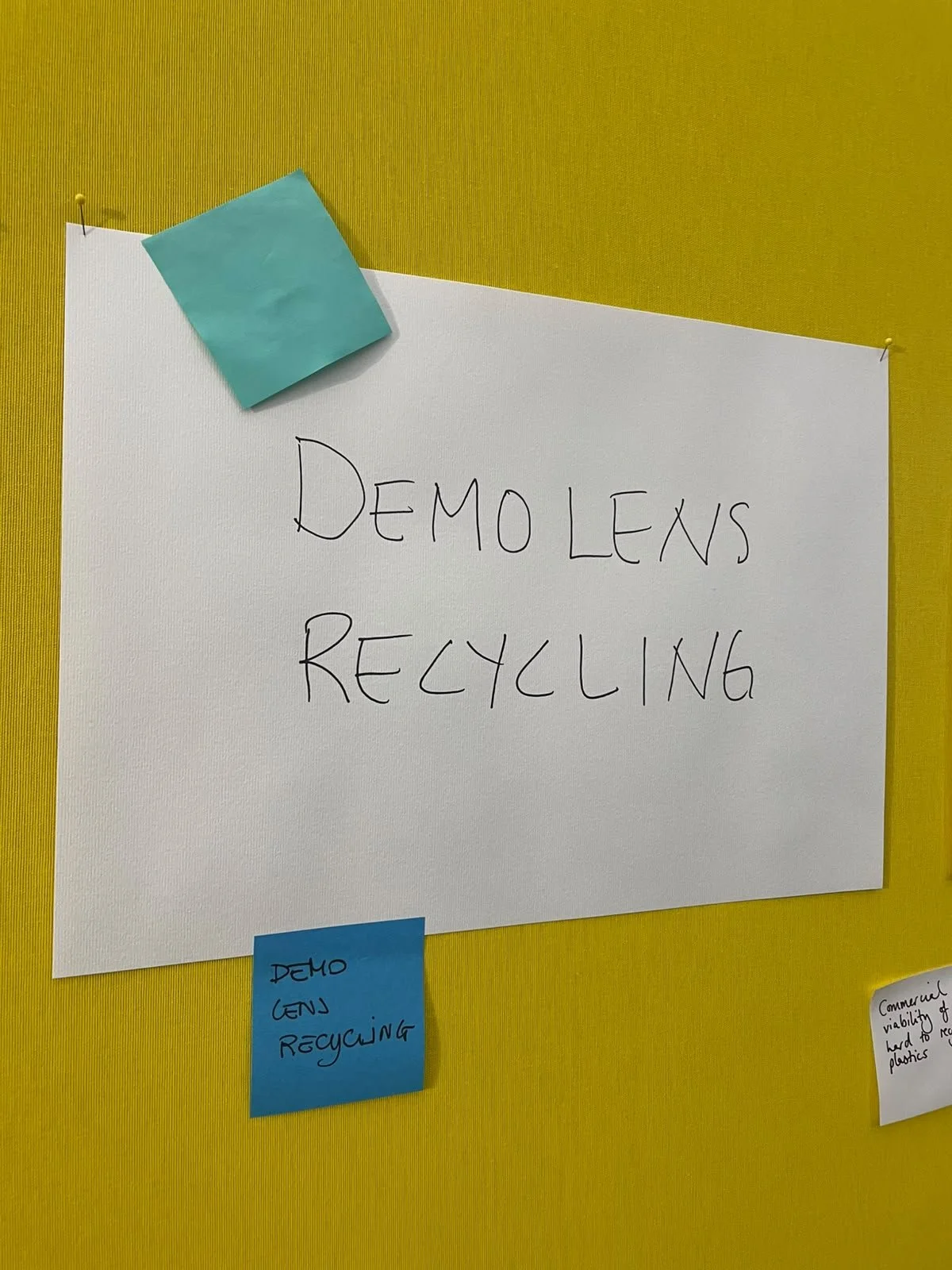
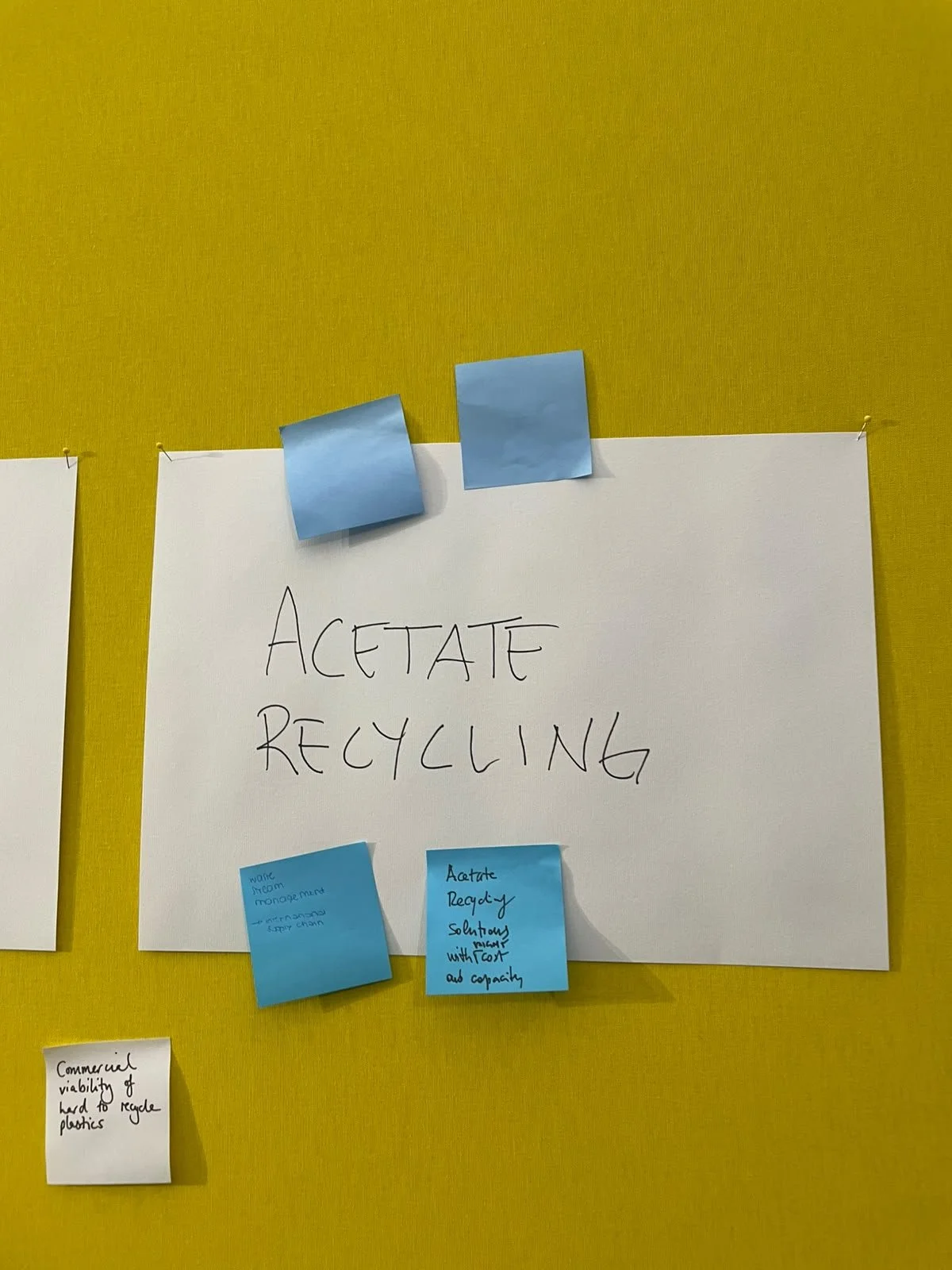
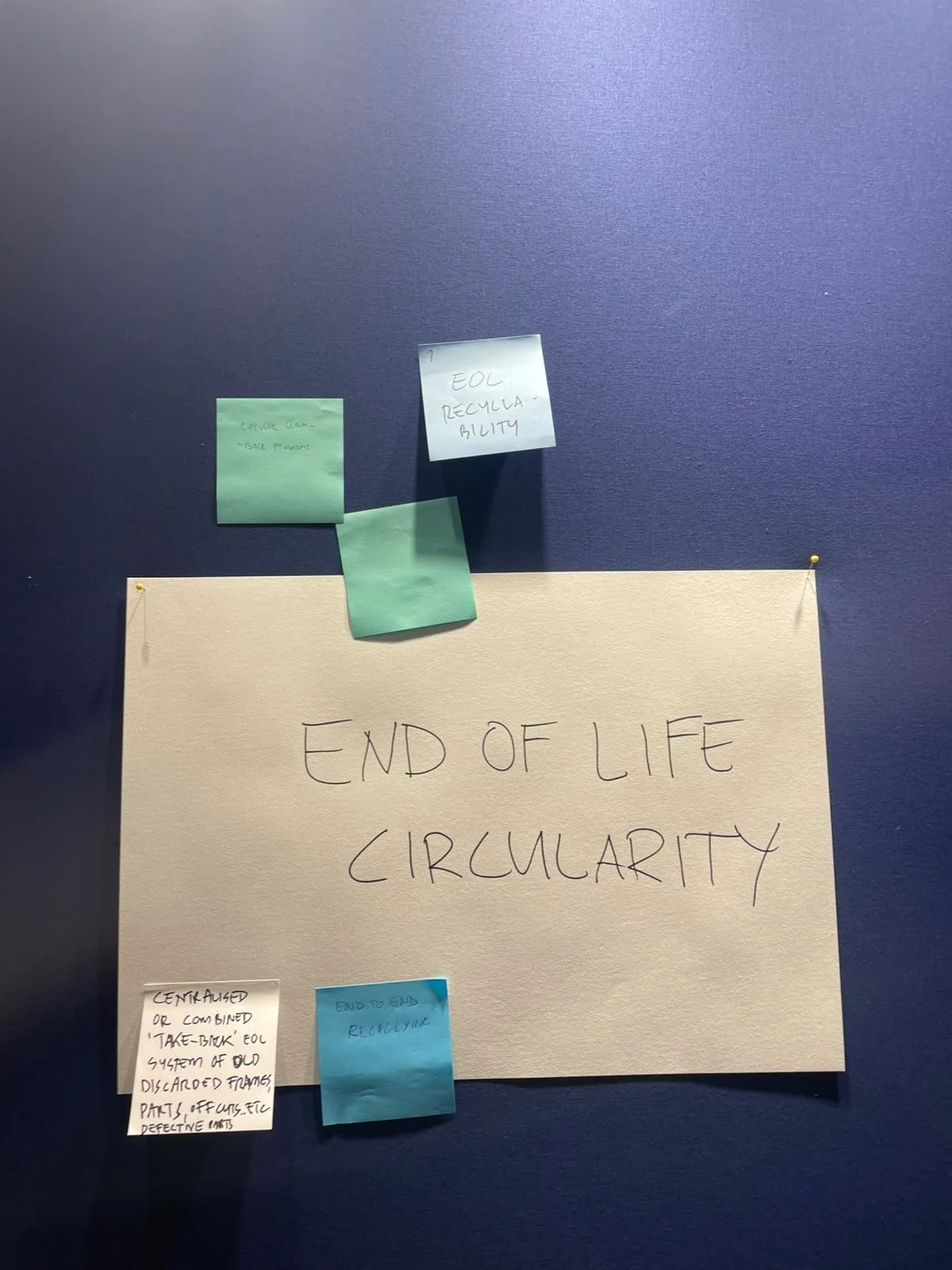
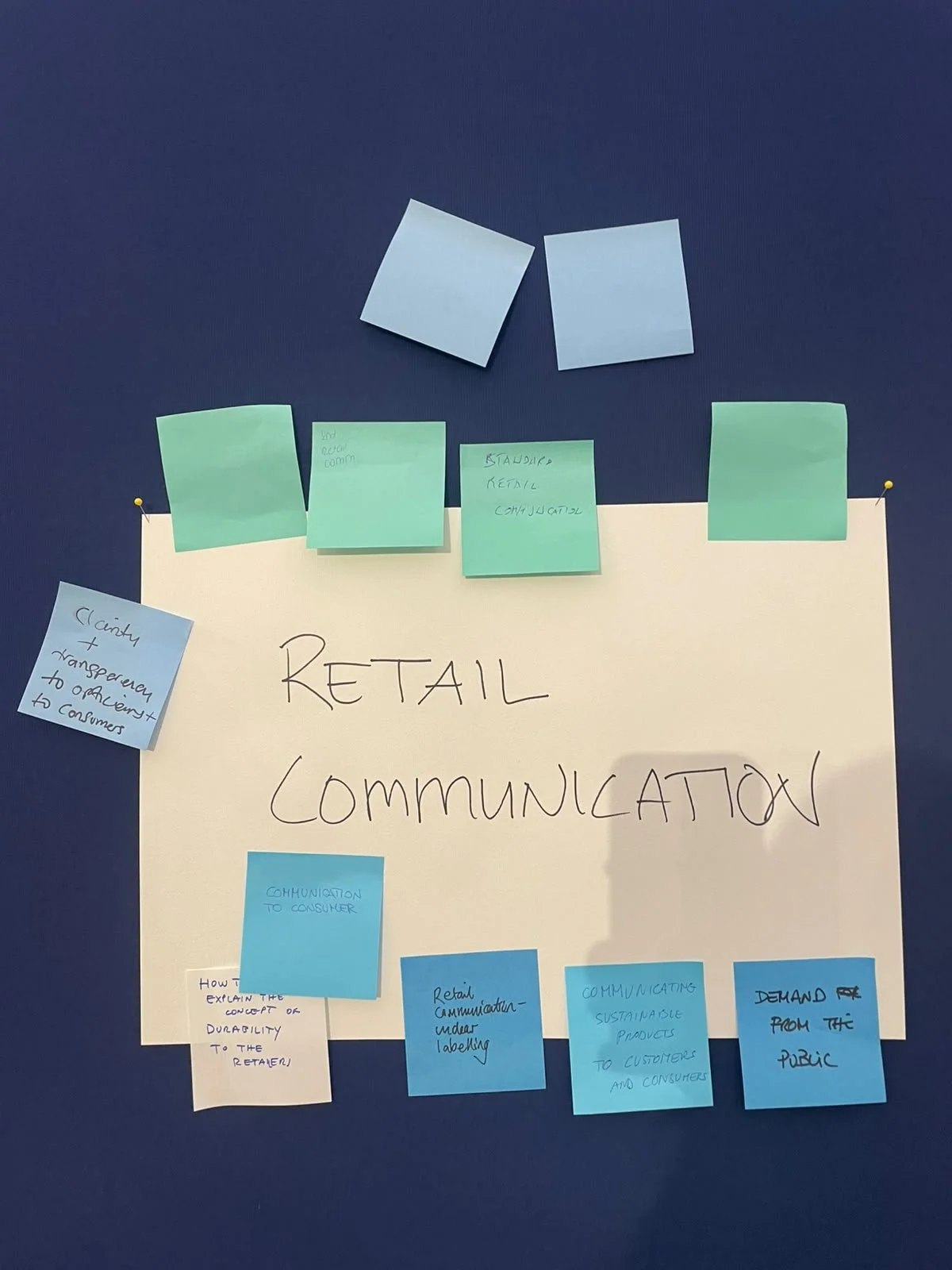
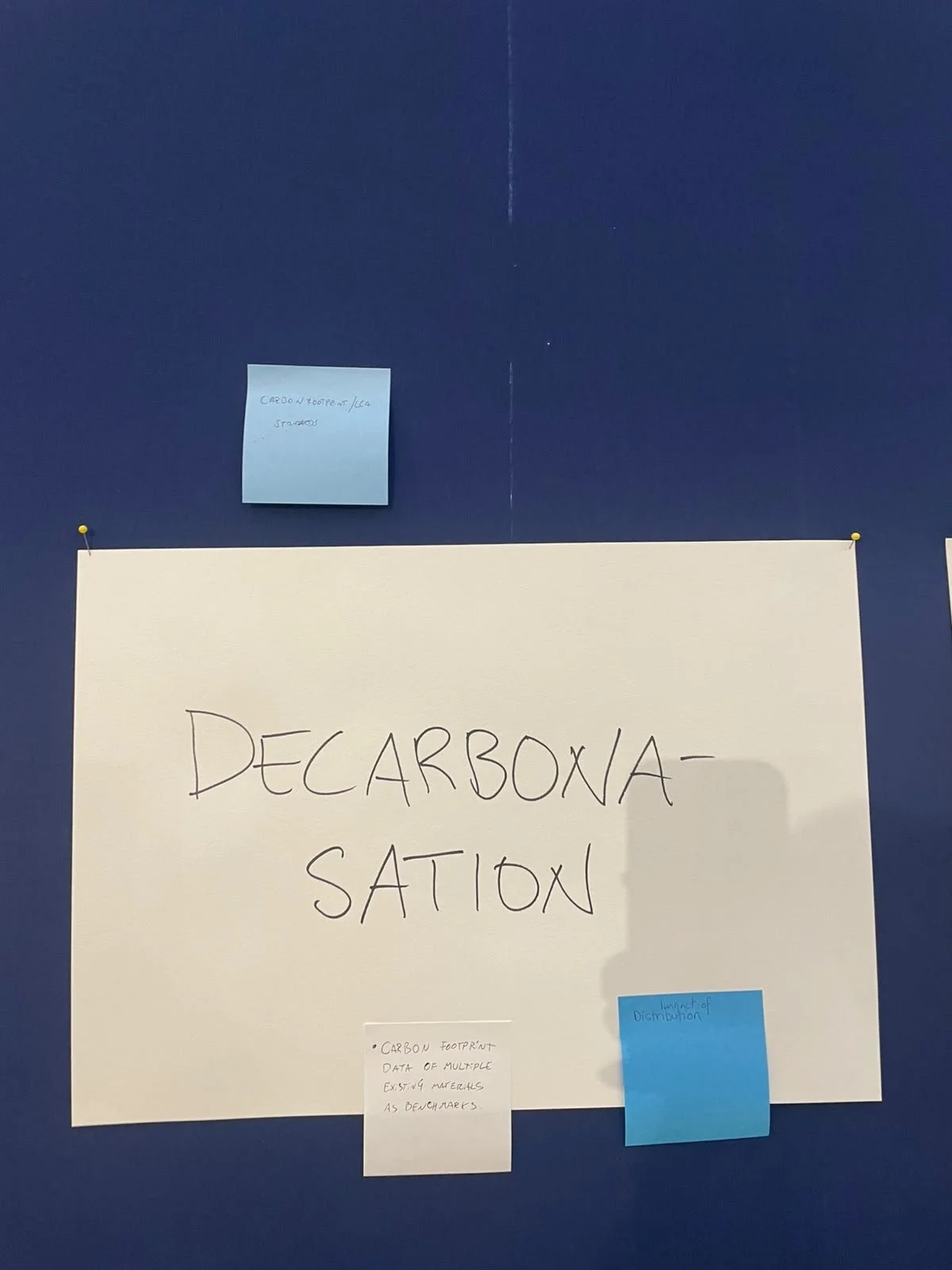
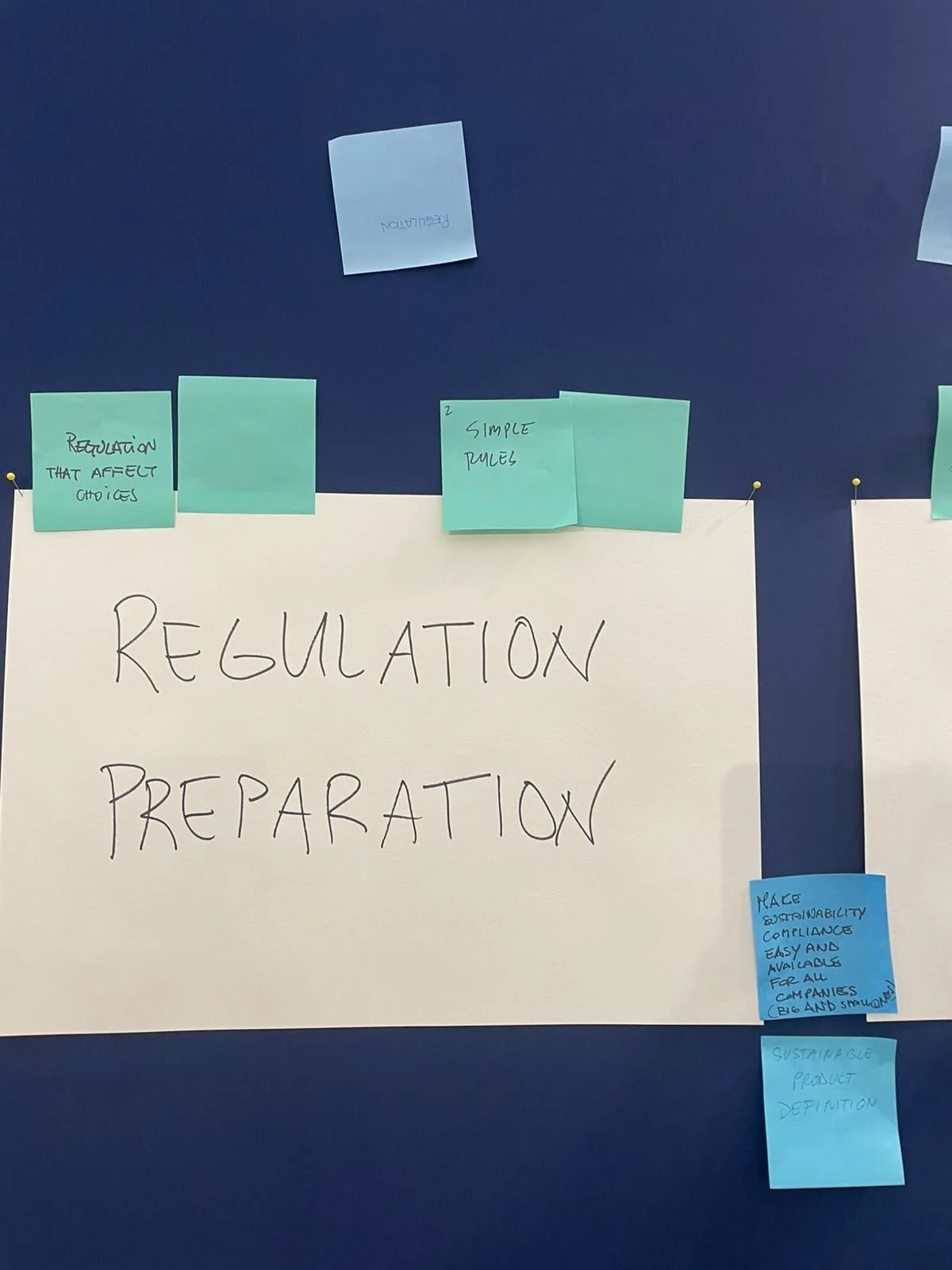
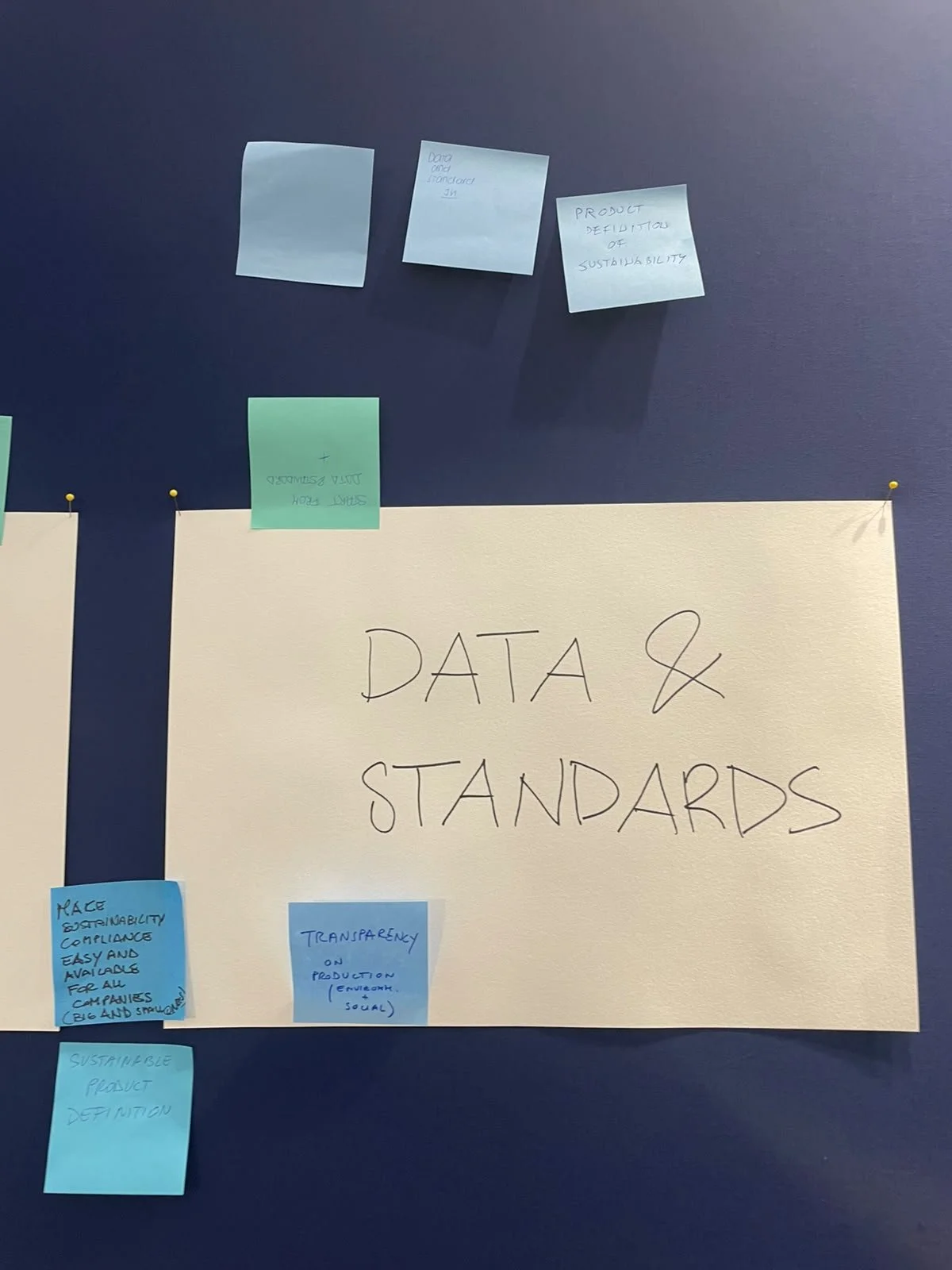
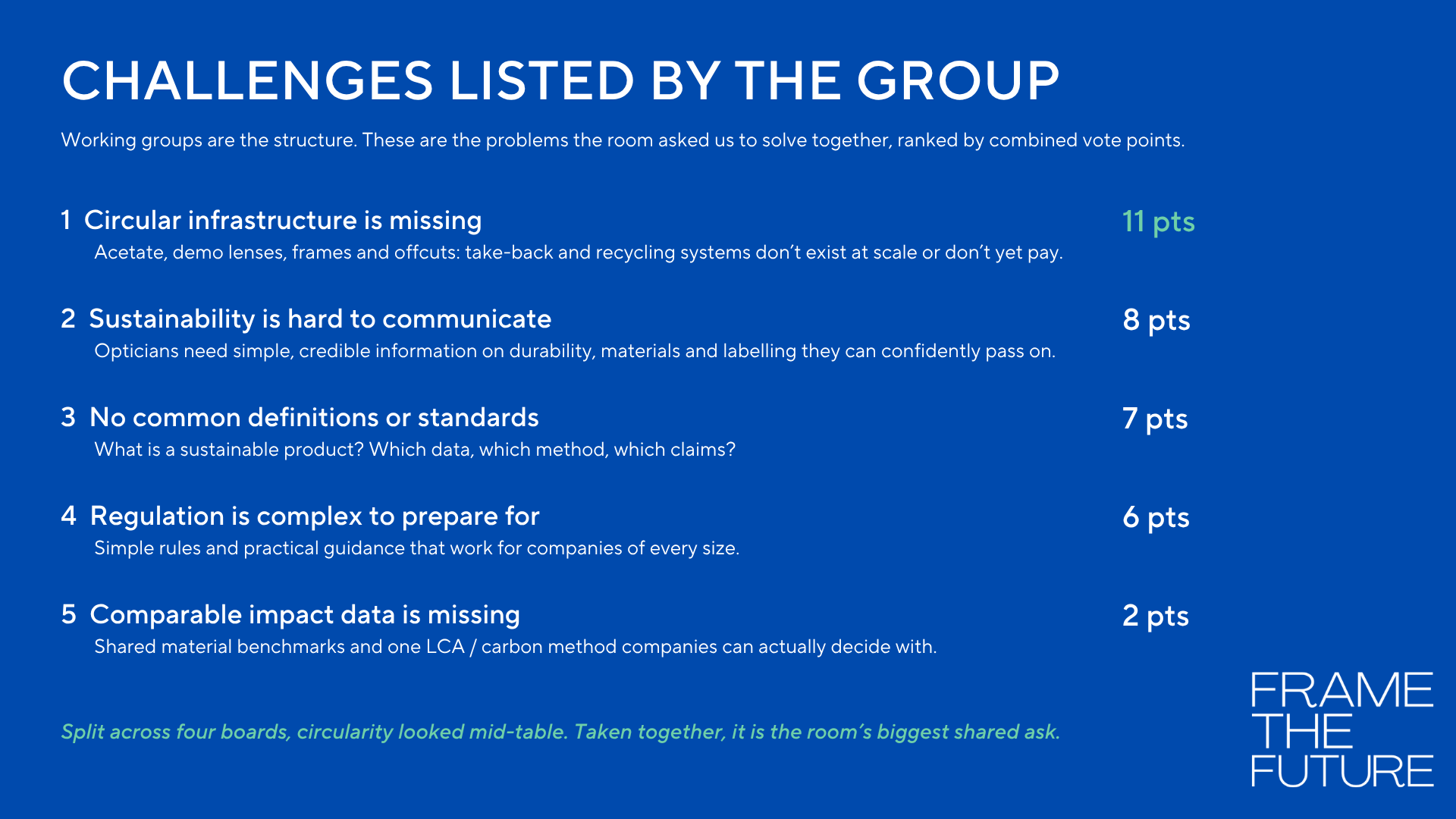
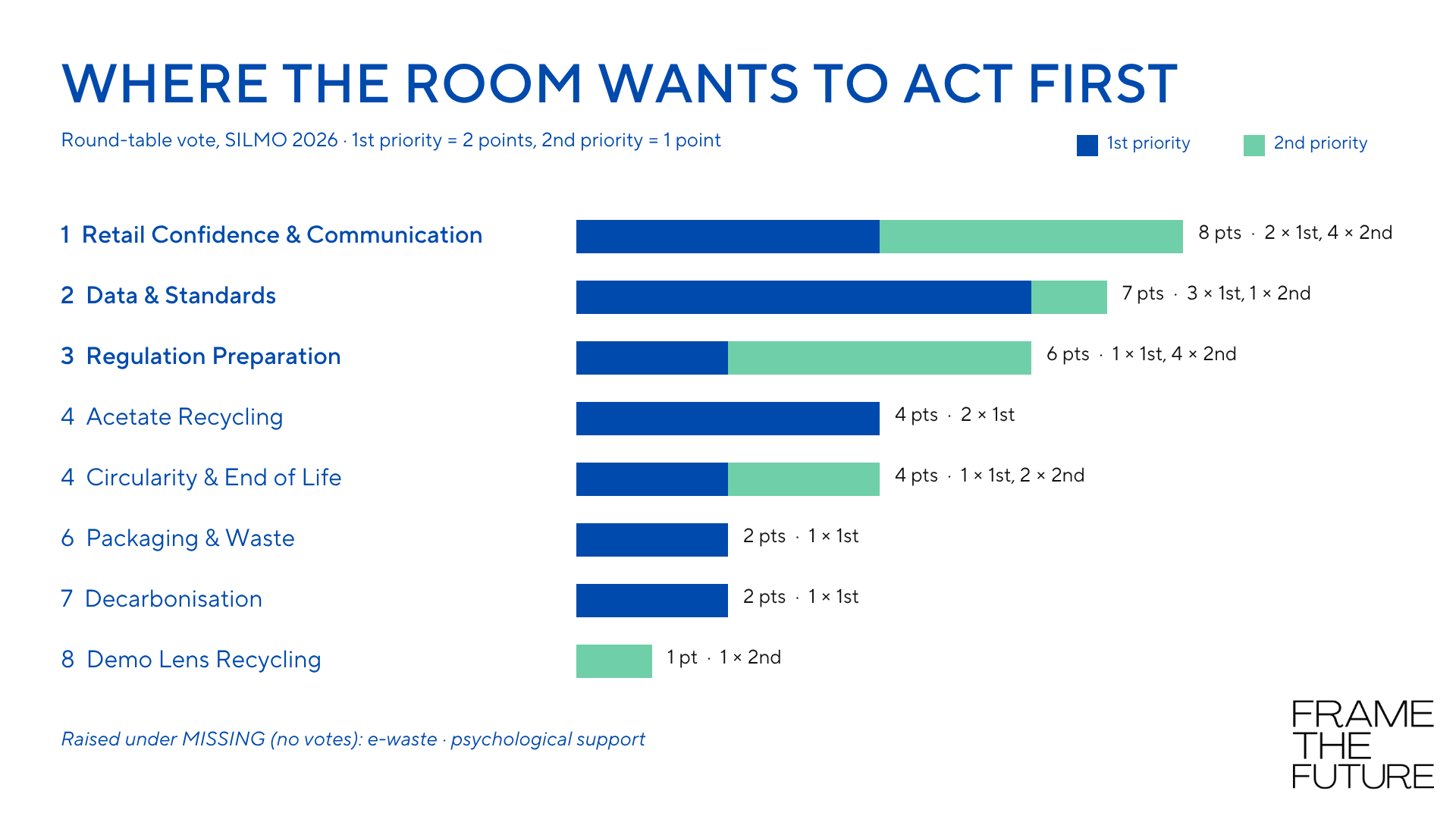
While Retail Communications collected the most unique challenges, the working group prioritisation votes were most densely clustered around Data & Standards, Regulatory Preparedness, and Retail Communications, with Acetate Recycling, Demo Lenses, and Circularity all contributing substantially to the theme of “material sustainability”.
In looking at these results, we can see that they are strategically interlinked. Challenges may present themselves differently and uniquely to companies, who quickly identify “materials” or “data” be me a major roadblock in their intended workflow. But stepping back, we can see how Material Availability will directly impact End-of-Life and Circularity, which directly impacts Decarbonisation. Similarly, better Data & Standards will directly improve Retails Communications and ConsumerTrust. As a convenor of these working groups with a shared central mission, Frame The Future can facilitate and accelerate meaningful progress across all action areas.
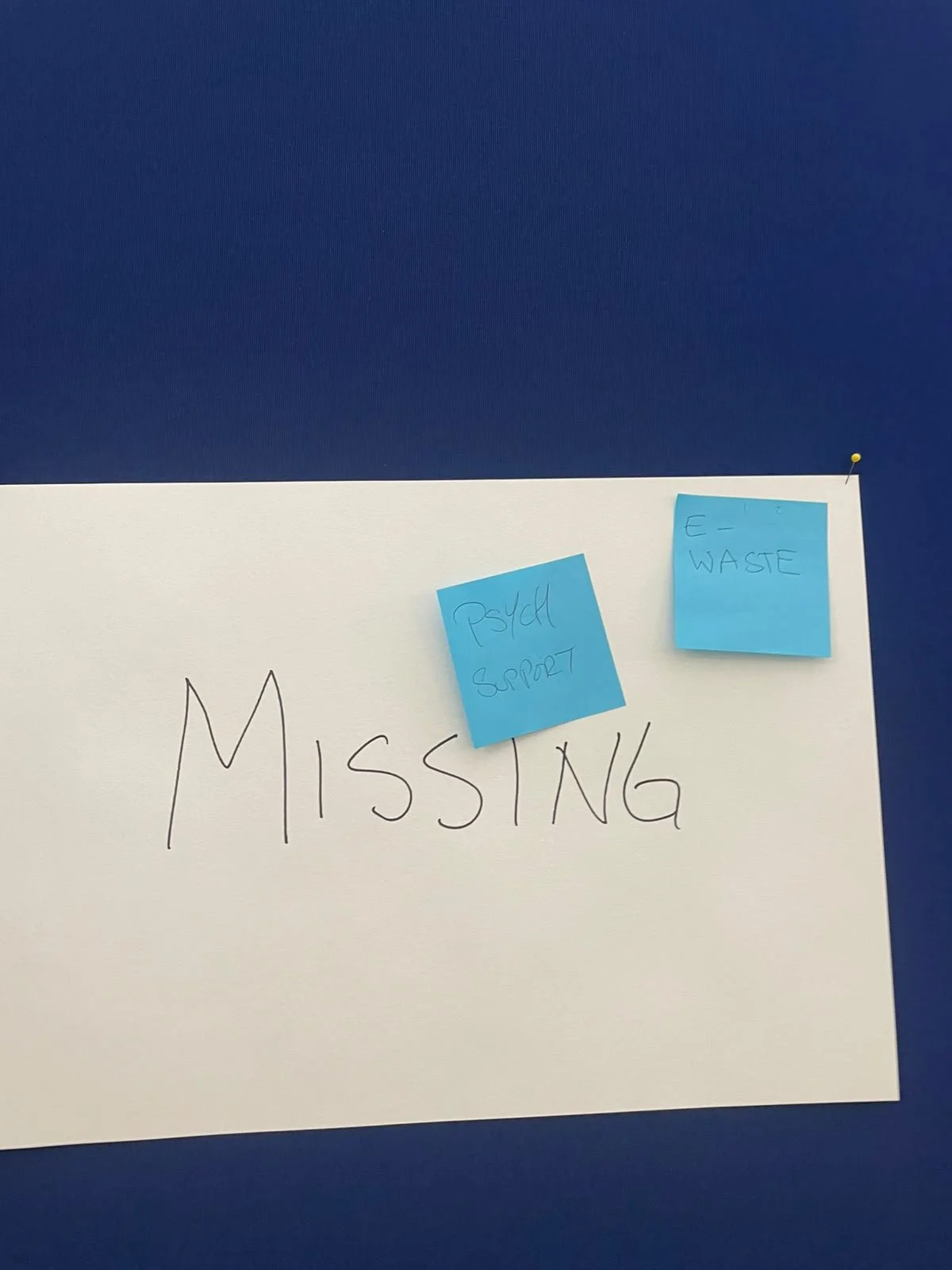
The additional board “Missing” was for any challenges that participants were experiencing but didn’t feel directly fell into the other areas. Two challenges were listed, and addressed by the group: E-waste (an increasing consideration as smart glasses expand in popularity), and “Psychological support” with respect to feelings of isolation for small teams and individuals working on sustainability alone. This was a particularly worthy addition, as it is a legitimate challenge and one that all working groups will directly help to address, through contact, collaboration, and comaradarie among industry peers.
It is worth noting that this was an initial exercise to gauge interest in particular action areas, but does not constitute a formal vote or decision-making process. It will be Frame The Future’s founding members who will ultimately vote and decide on the specific working groups to be formed in 2027.
To get involved in future events make sure that you’re subscribed to our newsletter, and to be directly involved in the working groups and to help shape the direction of Frame The Future from 2027 become a founding member now.